

If you’ve bought every basket Kmart sells, and your bathroom cabinet still looks like a losing game of Tetris, you’re not missing willpower. You’re missing a proper bathroom organisation system. One built for several people sharing a room the size of a generous wardrobe.
This is the space we get asked about most after the kitchen. It’s small. It’s shared. And everyone uses it differently — before school, before sport, and last thing at night. Below is the system we actually install in client homes. It’s the one that survives school mornings, swimming bags, and a child who has never once put a lid back on anything.
Quick Takeaways
- A system built for one person’s products won’t survive three people sharing a bathroom every morning.
- Zone the room by person or routine — one shelf per child — instead of by product type.
- Frequency of use decides where things live: daily at eye level, occasional up high, out of small hands’ reach.
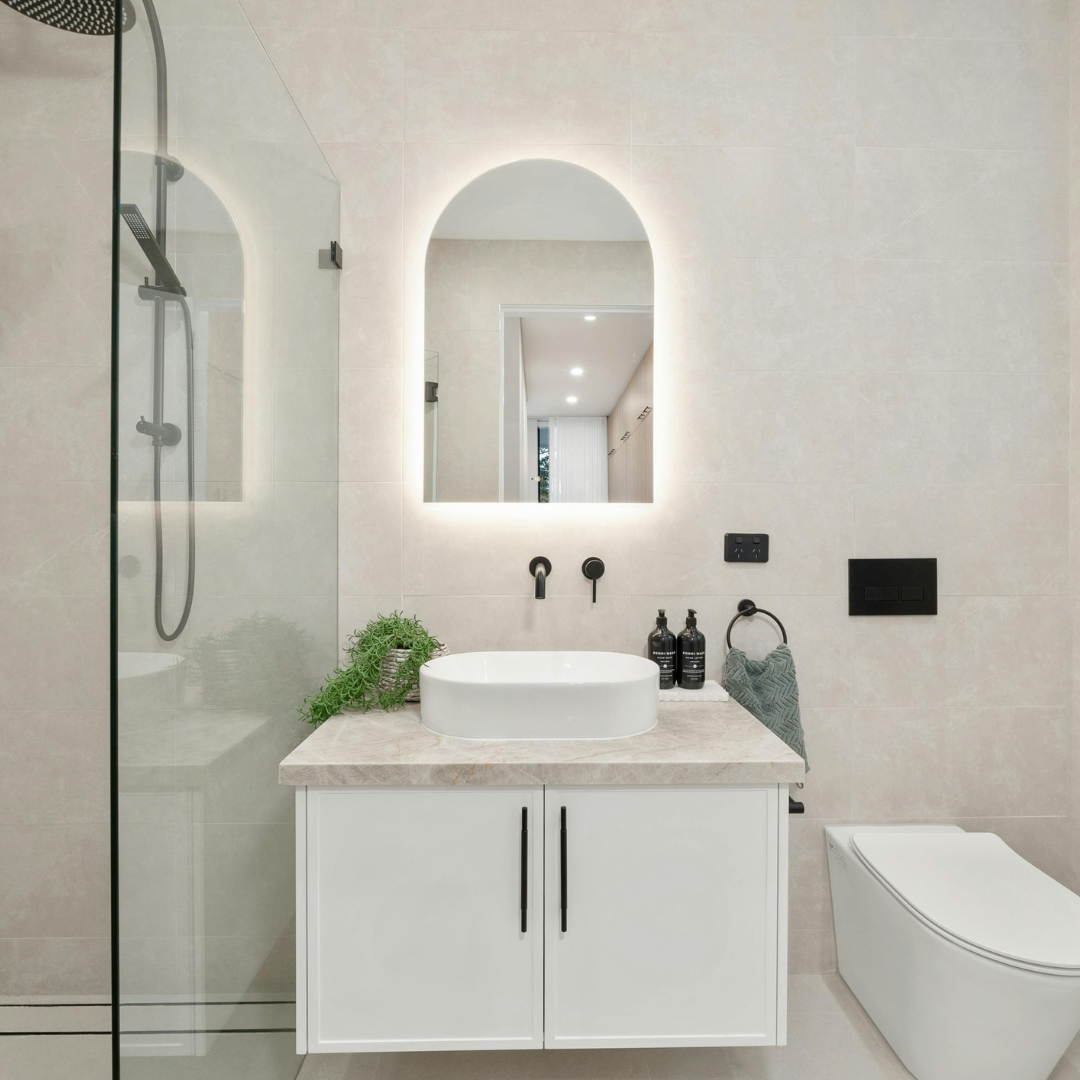
Why Most Bathroom Organisation Systems Fail in Real Family Homes
Most bathroom organisation systems fail for the same reason. They were designed for one person’s products, in one tidy aesthetic, with no room for a family’s actual life. A set of matching acrylic containers looks calm in a styled photo. But it has nowhere to put a school swimming bag, a teenager’s skincare routine, or the spare toothbrushes you bought because someone always loses theirs.
A system built for a real family home starts from what’s actually in the room. Not from what looks good in a catalogue. It needs to flex as kids grow from bath toys to deodorant. And it needs more than one person to find things without asking. Here’s the test we use with clients: can a tired parent and a distracted child both put things back in the same place, every day, without a reminder?
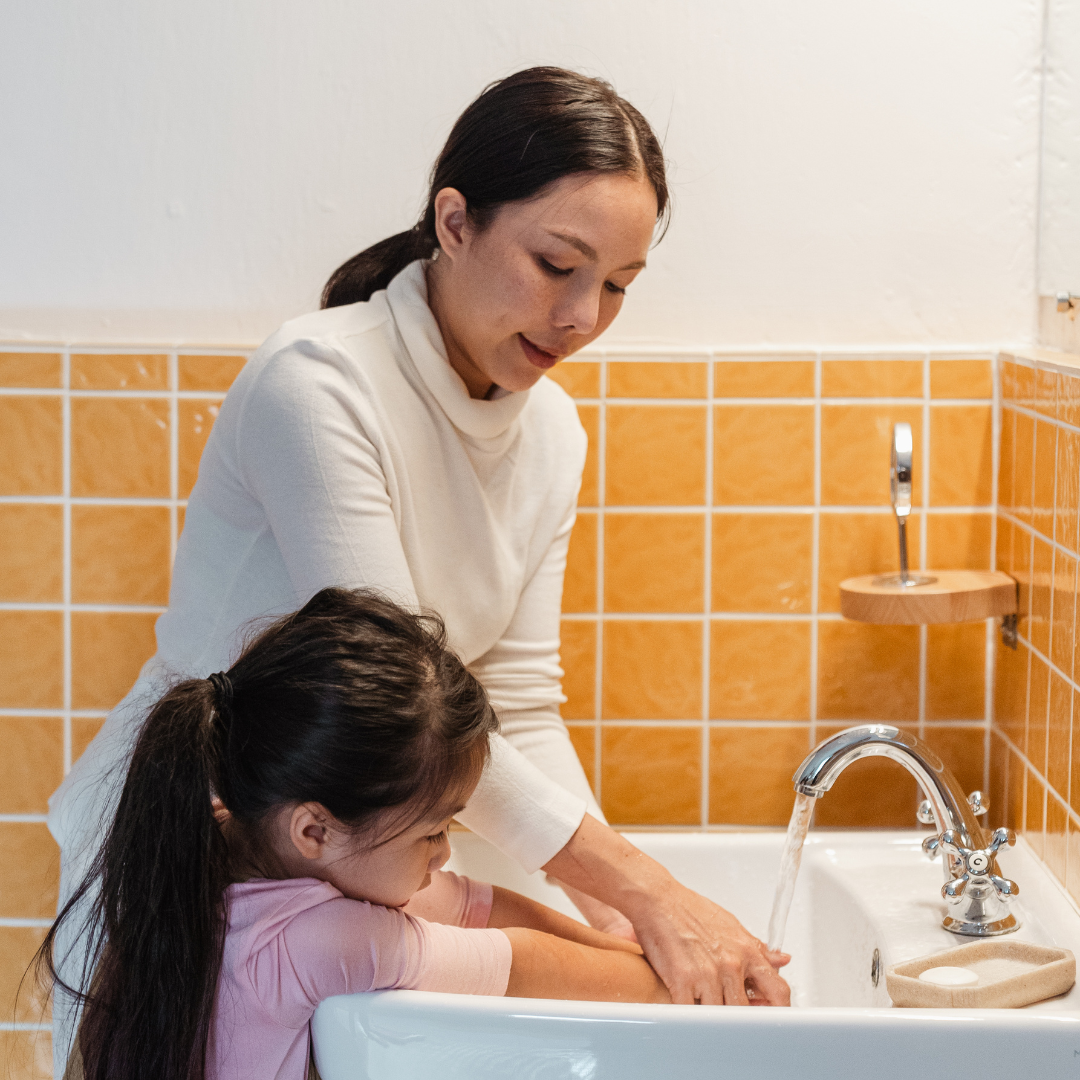
Step One: Empty the Room and Be Honest About What You Use
Before you buy a single container, clear the whole room onto the bench or the floor. You’ll find expired sunscreen, three half-used bottles of the same shampoo, and a product someone tried once and never touched again. Be honest about what’s actually used.
Sort everything into three piles: keep, bin, and “someone else might use this.” Outgrown bath toys and baby products can go to a friend with younger kids, or to a verified swap group. Anything past its use-by date — sunscreen, makeup, some medications — goes in general waste, not down the drain.
Most families skip this step. It’s also the one that makes the biggest difference. You can’t design a system for forty items if you’re actually trying to store ninety.
How Do You Build Bathroom Organisation Systems That Actually Stick?
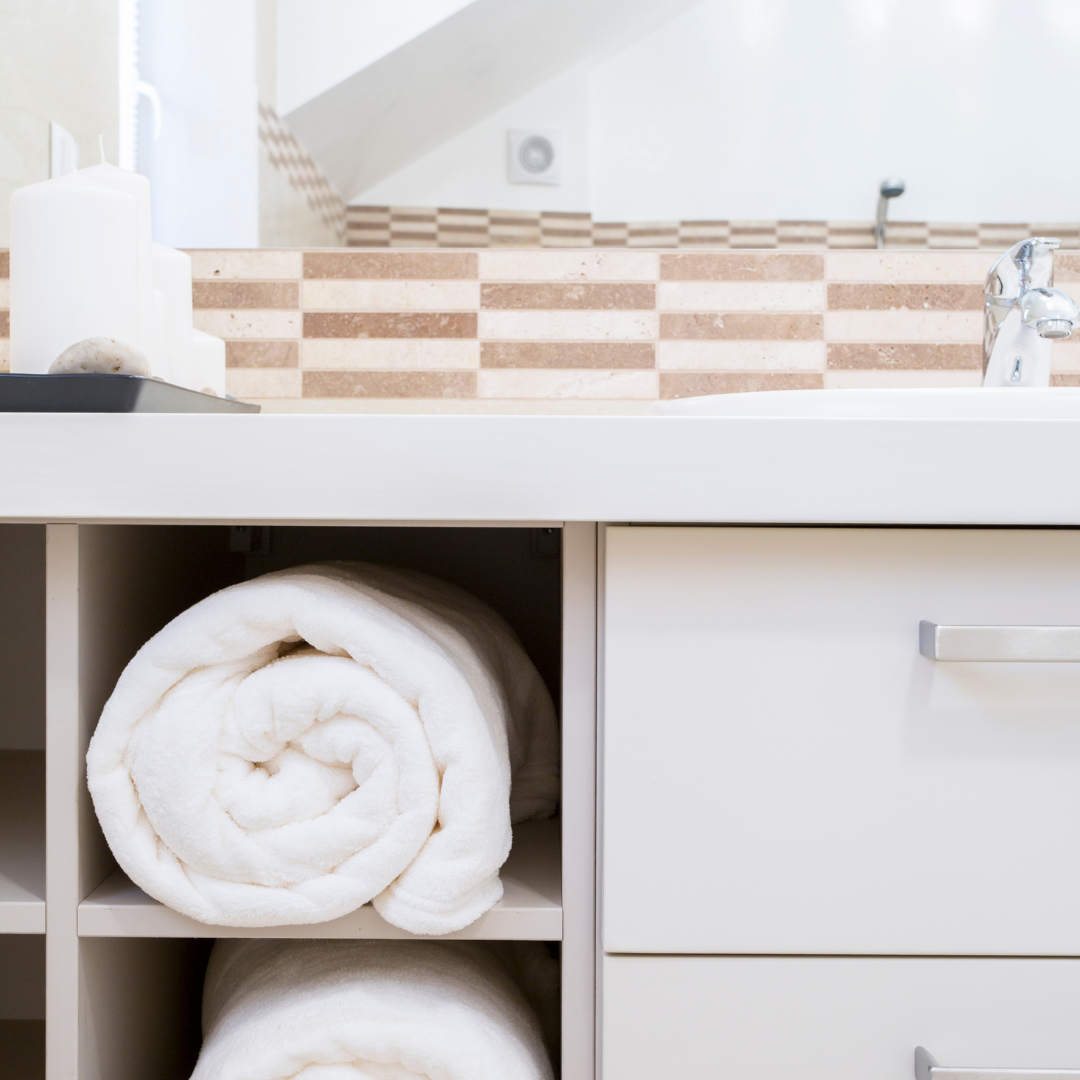
How do you build bathroom organisation systems that actually stick? You zone the room by person and by task, not by product type. A “shampoo and conditioner” zone sounds tidy. But it ignores the fact that three people use the shower, and each one wants something different.
Instead, give each person — or each routine, like “morning” and “bath time” — its own space. In a typical family bathroom, that might mean one shelf per child, one drawer for shared first-aid and grooming basics, and a separate zone for cleaning supplies, kept well out of small hands’ reach. Once the zones are set, everything else is just deciding where each zone physically lives.
Where Should Everything Actually Live?
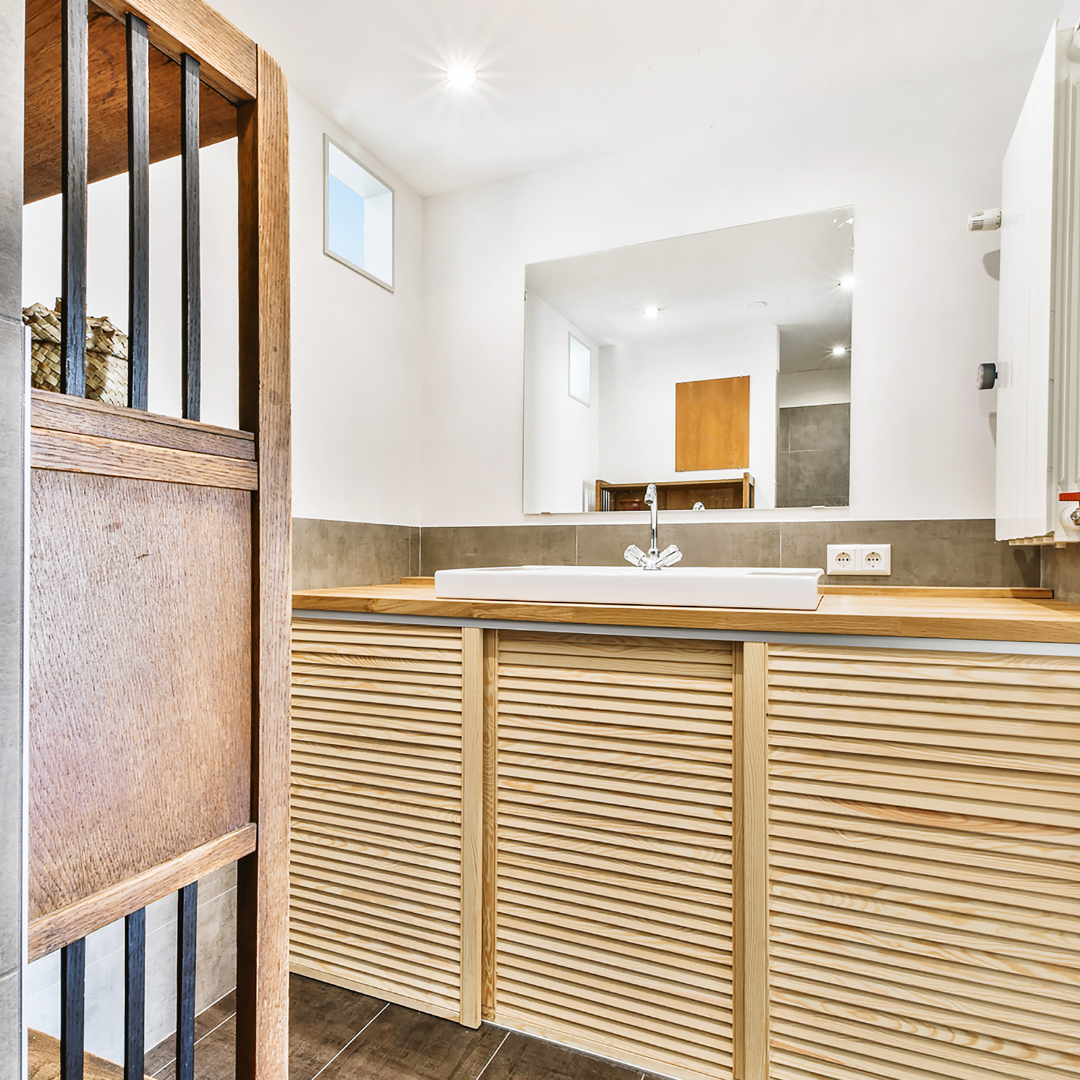
Where should everything actually live? Let frequency of use decide, not how nice the container looks. Daily items — toothbrushes, face wash, whatever gets used every morning — belong at eye level, or in the top drawer. Somewhere a child can reach without a step stool.
Weekly items, like hair treatments or shaving kits, can move to a lower shelf or the back of the cabinet. Monthly or occasional items — first aid, spare toiletries, cleaning products — go under the sink or in the highest cupboard, well away from kids. A shower caddy or hanging basket keeps the shower itself down to three or four bottles. That’s usually all anyone actually uses in there anyway.
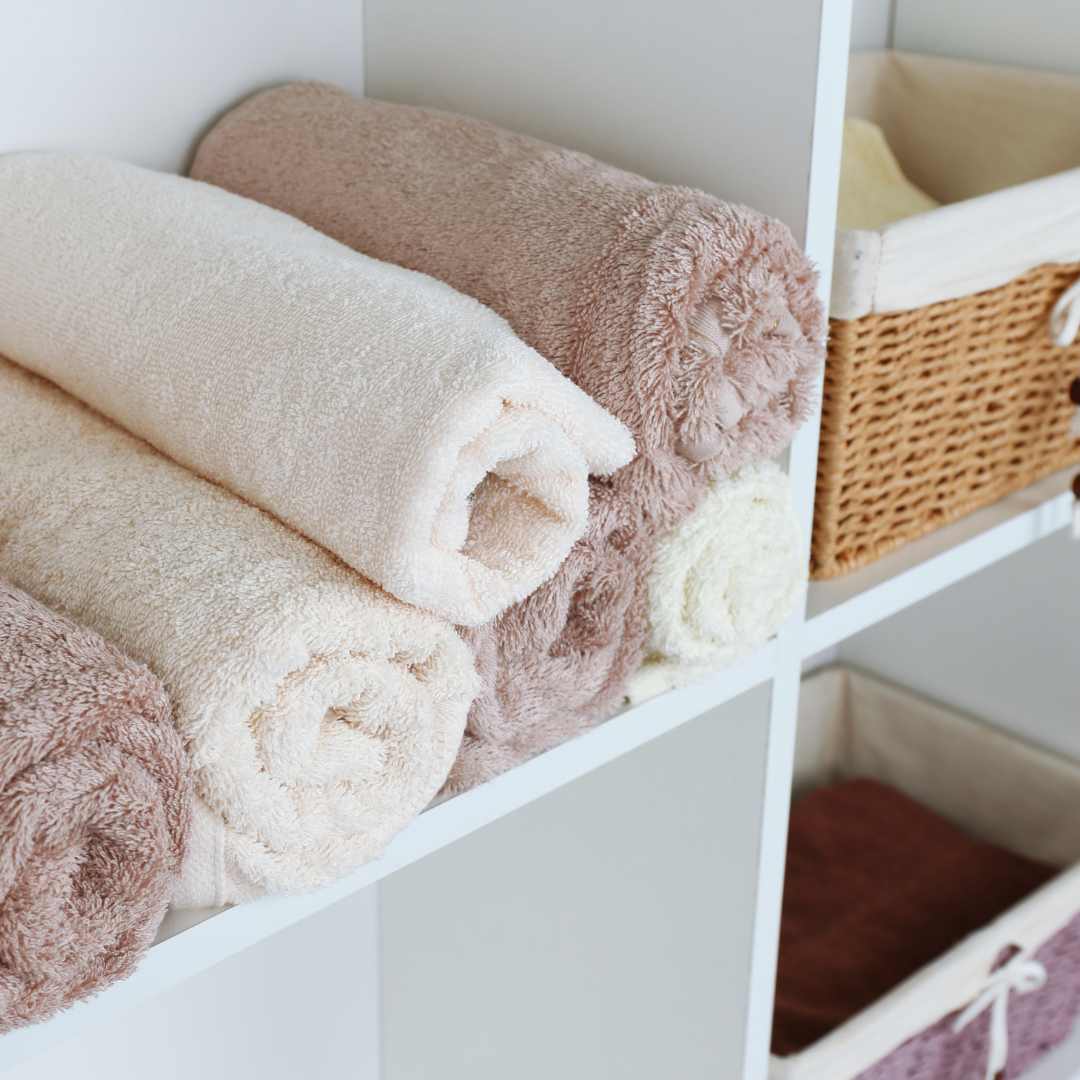
Bathroom Organisation Systems Kids Can Actually Use
Bathroom organisation systems only work long-term if the kids in the house can run them without you. That means low shelves for daily items, clear or labelled containers so kids can see what’s inside, and picture labels for anyone too young to read fluently yet.
Keep it forgiving. A simple basket they can drop a hairbrush into beats a perfectly folded system that falls apart the first chaotic morning. The goal isn’t a magazine-ready cabinet. It’s one less thing on your mental load — where everyone in the house can find what they need, and actually put it back.
For the most contested zone of all, our dedicated guide to bathroom cabinet organisation goes shelf by shelf.
Ready to Get Your Home Organised?
If you’d love a professional set of hands to help you declutter and organise your home, Eve and the Ducks in a Row team are here to help. We work with busy Melbourne families to create calm, functional spaces with simple systems that actually stick.