

Serving tray storage is one of those categories nobody plans for. Platters end up wedged on their sides. Trays get stacked three deep, and the one you need is always on the bottom. The whole system only works as long as nothing new gets added to the pile. A kitchen can have good storage everywhere else and still lose the plot right here, because serving pieces are large and awkward, and you use them far less often than everyday plates and bowls.
The fix is rarely more cupboard space. It is almost always a system that gives each tray, platter and board its own slot. Then putting one away takes seconds instead of a small negotiation with everything stacked in front of it. Below is the process our team runs on real kitchen jobs, plus the products that genuinely solve this category, so you can set it up once and stop thinking about it.
Affiliate disclosure: As an Amazon Associate, Ducks in a Row may earn from qualifying purchases. We only recommend products we genuinely believe will help busy families create calmer, more organised homes. Clicking the links costs you nothing extra.
Quick Takeaways
- Vertical storage beats stacking for anything flat and large, because you can see and reach every item without unpacking the rest.
- Measure your cupboard before you buy an organiser. Trays and platters vary a lot in height and depth.
- Give serving pieces a dedicated spot. Fewer things then end up loose on the bench, waiting for a decision later.
The 5-Step Process for Organising Serving Tray Storage
Work through the space properly before buying anything. This is the same process our team runs in client kitchens, and it holds up whether you have one deep cupboard or a whole run of them.
- Remove everything. Pull every tray, platter, board and serving dish out of the cupboard. Lay it all on the bench so you can see the full collection at once.
- Declutter. Set aside anything cracked, warped or duplicated. Three lasagne dishes and one oven rarely need to coexist.
- Plan where each item should live. Group by size and how often you use each piece. The platter for every Sunday roast belongs at the front. The Christmas-only trifle bowl can sit at the back.
- Measure your space. Check the height, width and depth of the cupboard or drawer. Note whether you need to remove a shelf to fit a tray on its edge.
- Select your products. Choose organisers that match what you measured, instead of buying something that looked good online and hoping it fits.
What to Look for in Serving Tray Storage
The best products for serving tray storage do one thing in common: they hold flat items on their edge, not flat on top of each other. Once a tray stands upright, it takes up a fraction of the space. You can slide it out without disturbing anything beside it. Look for adjustable dividers, because a single fixed slot width rarely suits every platter in a real kitchen. Depth matters too. A tall narrow organiser will tip over in a shallow cupboard, while a low one wastes the height above it. Finally, check how the piece mounts or sits. A cupboard shelf and a drawer call for different builds entirely.
Bamboo Standing Tray Organiser

Bamboo Standing Tray Organiser
This is the workhorse for serving tray storage in a cupboard. The upright slats hold trays, cutting boards and baking sheets on their edge. Each one lifts straight out without disturbing the rest. It sits flat on a shelf and needs no fixing, so it is the first thing to try before anything more permanent.
Is a Tension Rod Enough for Serving Tray Storage?

Tension Rod
A tension rod fitted across a cupboard creates an instant vertical slot for one large tray or a couple of thin cutting boards. It costs very little and fits in minutes. That makes it a good starting point in a shallow cupboard, though it holds fewer items than a dedicated rack.
Divided Organiser

Divided Organiser
Where trays vary a lot in size, a divided organiser with adjustable slots earns its place. You can widen a slot for a platter and narrow the next one for a thin chopping board. Then nothing wobbles loose when the cupboard door opens and closes through the week.
Does a Pegboard Drawer Insert Suit a Serving Drawer?
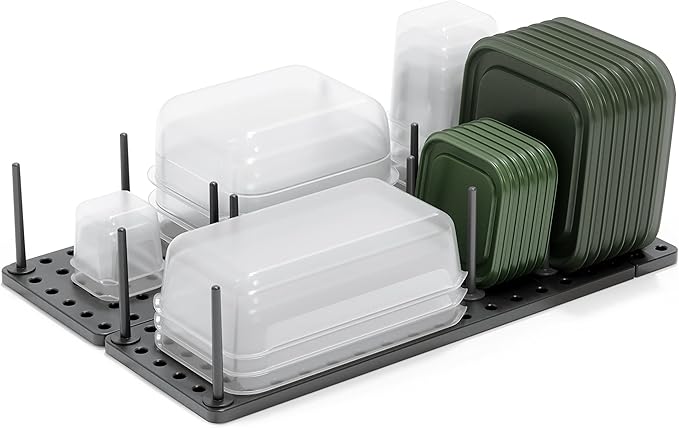
Pegboard Drawer Insert
A pegboard insert turns a drawer into a custom grid. You reposition the pegs to fit odd-shaped serving pieces, such as a cheese board or a jug. It works best in a drawer rather than a cupboard, and it suits a household that serves a wide mix of shapes rather than a stack of matching trays.
Choosing the Right Serving Tray Storage for Your Home
The right serving tray storage for your kitchen depends on where the pieces currently live and how often you use each one. If everything sits in a cupboard, start with a standing organiser or a tension rod, since both work with the shelf you already have. If the mess is really in a drawer, a divided or pegboard insert will do more for you than anything upright. Either way, measure first and buy once. A tray organiser bought to fit the gap, rather than the other way around, is the one that actually gets used six months from now.
A household that entertains often will likely need more than one solution. Pairing a standing organiser for the everyday platters with a tension rod for the oversized trays that only come out for a crowd tends to work well. Someone who rarely hosts can usually get away with one organiser and a tidy habit of putting things straight back in their slot. Either way, the goal is the same: open the cupboard, see every tray at a glance, and never have to shuffle three platters to reach the one at the back.
Ready to Get Your Home Organised?
If you’d love a professional set of hands to help you declutter and organise your home, Eve and the Ducks in a Row team are here to help. We work with busy Melbourne families to create calm, functional spaces with simple systems that actually stick.