
For many of us, our craft or hobby space is meant to be a little sanctuary. It’s where we knit, paint, scrapbook, sew, build, or tinker away at projects that bring us joy. But here’s the problem: creative spaces often become messy, overwhelming, and frustrating. Instead of sparking inspiration, they leave us searching endlessly for supplies and feeling too stressed to even start.
If this sounds familiar, you’re not alone. The great news is that with a few simple strategies, you can transform your space into an organised, functional, and inspiring hub, without the stress.
Why Organising Your Craft or Hobby Space Matters
A tidy and well-organised hobby area is more than just “nice to have”, it makes a real difference in how you feel and how much you create.
- Boosts creativity: Clutter is distracting. An open, clear space encourages fresh ideas and flow.
- Saves you time: No more wasting 20 minutes looking for that one missing brush or spool of thread.
- Prevents waste and overspending: When everything is visible and accessible, you avoid buying duplicates of supplies you already own.
- Increases productivity: A systemised space makes it easier to set up, work, and pack down quickly.
- Adds joy and calm: A well-organised room feels good to walk into, instantly putting you in the mood to create.
Think of organisation as a way to support your creativity, not stifle it. The right setup means you’ll spend less time “managing” your hobby and more time actually enjoying it.
Step 1: Declutter Before You Organise
Before rushing out to buy new baskets or storage bins, you need to clear the clutter. Otherwise, you’ll just be organising chaos.
- Take everything out. Clear shelves, drawers, and bins completely. This gives you a fresh starting point.
- Group into categories. Lay everything out by type, yarn, fabric, beads, brushes, paints, papers, stamps, etc. This helps you see exactly what you own.
- Let go of excess. Toss dried-out paint, frayed brushes, broken tools, and scraps you’ll realistically never use. Be honest, will that tiny fabric offcut really turn into a project?
- Donate what you don’t need. Extra craft supplies are gold for schools, community groups, or other hobbyists. Someone else can give them new life.
Decluttering tip: Ask yourself, “Do I have a project in mind for this?” If not, it may just be taking up precious space.
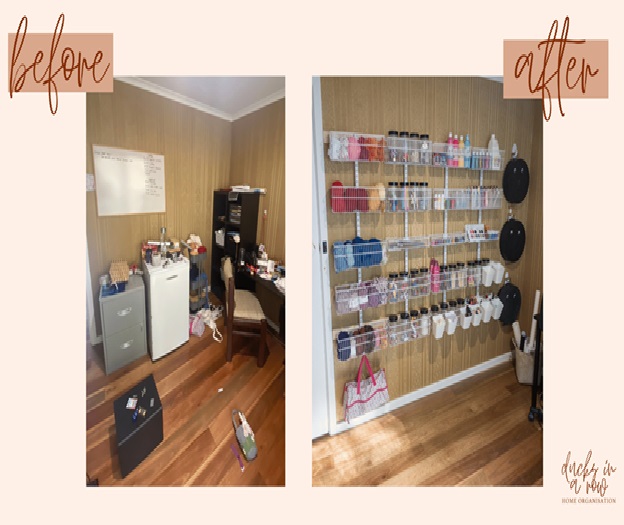
Think of this step as creating breathing room. Once the clutter is gone, you’ll notice an instant lift in motivation.
Step 2: Create Zones for Different Activities
Once you’ve decluttered, think about how you actually work. Most crafts involve different steps, cutting, assembling, finishing, and you’ll save time and frustration by setting up zones.
- Work zone: Your main table or desk, kept clear for current projects.
- Tool zone: A dedicated spot for scissors, rulers, glue guns, and frequently used equipment. These should be easy to grab without rummaging.
- Supply zone: Shelving, containers, or drawers for bulk supplies like fabric stacks, yarn skeins, or scrapbook paper.
- Inspiration zone: A corkboard, pinboard, or even a wall shelf where you can pin ideas, keep a colour chart, or display work-in-progress.
- Storage zone: Less-accessed space (like under a table or high shelves) for seasonal or rarely used materials.
By assigning areas, you’re not just creating order, you’re also setting up a space that flows with your creative process. Even in a small corner, clearly defined “mini-zones” can make a huge difference.
Step 3: Choose Smart Storage Solutions
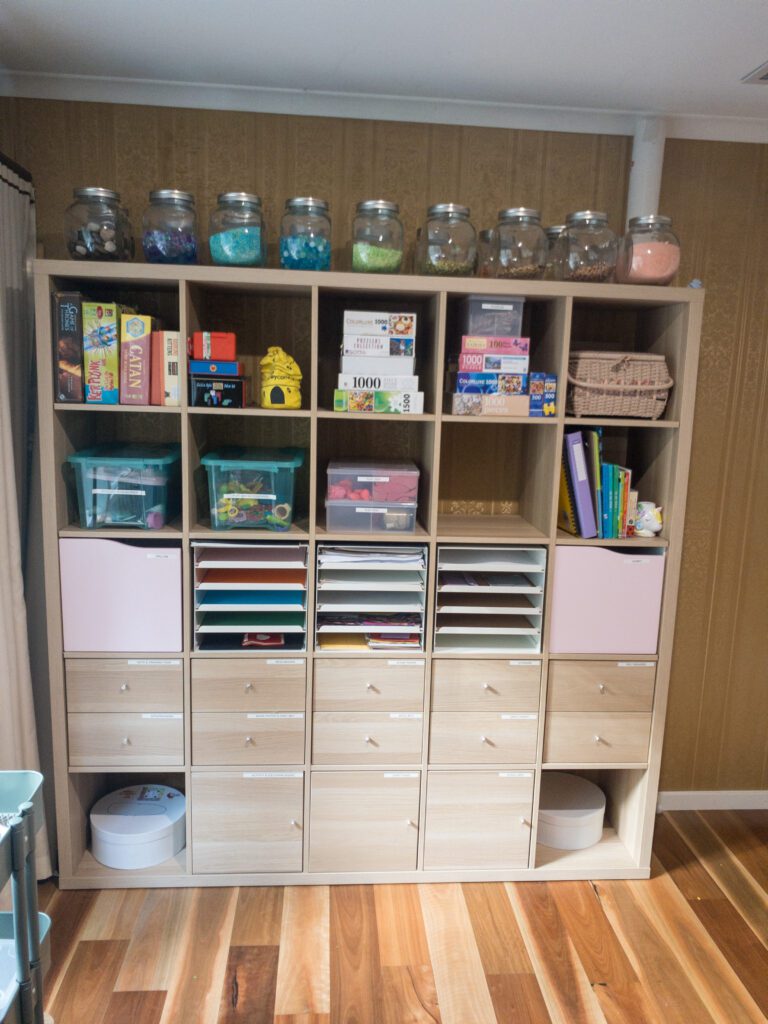
The right storage is the secret to a clutter-free hobby space. Aim for systems that are visible, functional, and easy to maintain.
Best craft and hobby storage ideas:
- Clear plastic containers: Let you see contents at a glance, saving time.
- Stackable bins: Maximise vertical space on shelves or in cupboards.
- Drawer organisers: Ideal for tiny items like buttons, beads, or threads.
- Rolling carts: Perfect for moving supplies between rooms or zones.
- Pegboards: Keep tools like scissors, rulers, and cutters displayed and within easy reach.
- Mason jars or baskets: Great for storing brushes, markers, knitting needles, or crochet hooks.
- Magazine holders or file folders: Organise patterns, instructions, and scrapbooking papers upright.
- Over-the-door organisers: Sneak in extra space for paints, pens, or ribbons.
Pro tip: Always label everything. Even clear bins need labels, it reduces confusion and helps you (and anyone else in your home) put things back where they belong.
Don’t underestimate the power of vertical space. Walls, doors, and even the sides of furniture can double as storage zones.
Step 4: Keep Your Workspace Clear
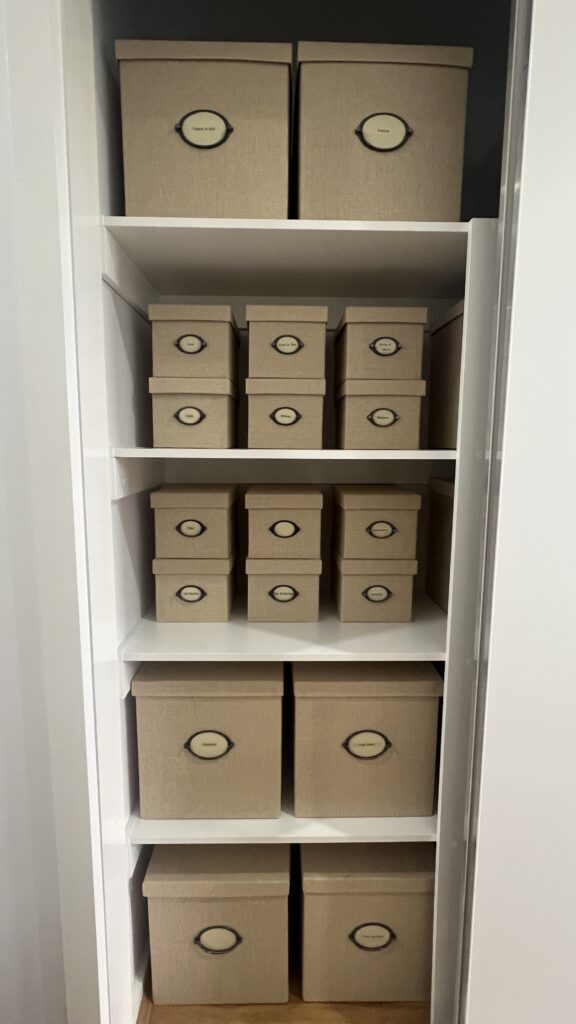
One of the biggest struggles with creative spaces is the temptation to leave works-in-progress and tools scattered everywhere. Over time, that clutter builds up and makes the area unusable.
To avoid this:
- Use project boxes or baskets to store unfinished pieces neatly until you return to them.
- Develop a 5-minute end-of-day routine: put tools back, return supplies to containers, and wipe down your surface.
- Only keep items on your desk that you’re actively using. Everything else belongs in a designated spot.
This habit ensures you walk into a fresh, ready-to-use space every time. Remember: creativity thrives on freedom, and freedom often comes from clear surfaces.
Step 5: Make It Inspiring and Personal

Organisation doesn’t mean your space has to look sterile. In fact, the best hobby spaces balance function with inspiration.
- Choose storage bins or boxes in colours and textures you love.
- Hang floating shelves for both storage and display of finished projects.
- Use pegboards or wall grids as both practical storage and an artful feature.
- Add good lighting, natural light is ideal, but desk lamps or ring lights also work wonders.
- Include a touch of comfort: a supportive chair, a soft rug, or even some greenery.
An inspiring space is one you’ll want to return to again and again. Even small touches, like a favourite candle or a framed photo, can give your space warmth and personality.
Step 6: Maintain Organisation Over Time
Decluttering and setting up systems is only the beginning. The real magic comes from maintaining those systems.
Here’s how:
- Tidy as you go. Don’t wait for the mess to pile up, reset at the end of each session.
- Set a monthly reset. Spend 15–20 minutes each month decluttering scraps, checking supplies, and resetting zones.
- Adopt the one-in, one-out rule. If you buy new paints or fabric, let go of an older item you won’t use.
Mindset shift: Organisation is not a one-time job, but with small consistent habits, your space will stay clutter-free long term.
How a Professional Organiser Can Help
If your craft or hobby space feels overwhelming, you don’t have to tackle it alone. A professional organiser can step in with a calm, supportive approach to make the process easier and less stressful.
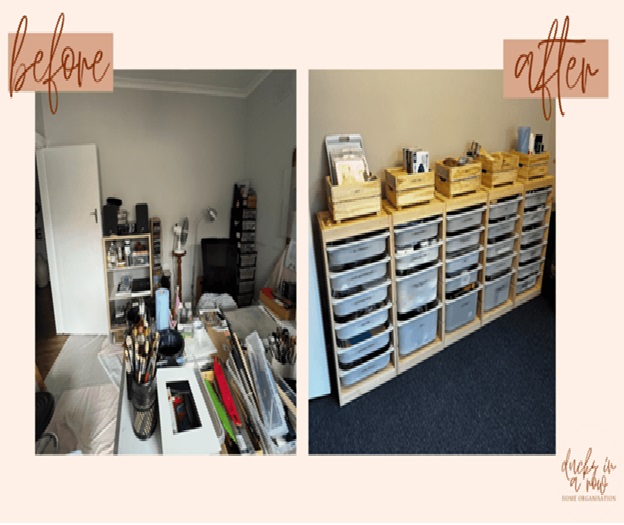
Here’s how they can help:
- Personalised solutions: They’ll look at the way you work and design storage systems that match your creative style and space.
- Guided decluttering: With a fresh perspective, they’ll help you sort through supplies, decide what to keep, and let go of what’s no longer useful.
- Stress-free process: Instead of feeling stuck, you’ll have someone by your side to keep you motivated and focused.
- Efficient setup: They can create clear zones and organise supplies so everything has a home.
- Sustainable systems: Beyond the initial tidy-up, they’ll set up routines and practical solutions that make it easy to maintain order long term.
With professional support, your hobby space can shift from cluttered and chaotic to calm, inspiring, and ready for creativity, often in less time than you imagined.
An organised craft or hobby space isn’t about being “Pinterest-perfect”, it’s about creating a functional, enjoyable environment where your creativity can thrive.
Clear Space Calm Mind!
By decluttering what you no longer need, setting up activity zones, and choosing smart storage solutions, you’ll find it easier to focus on your projects and enjoy the process. Add in daily tidy-up habits and personal touches, and your hobby space will quickly become a source of inspiration instead of stress.
Remember, organisation is not about rules, it’s about freedom. A clear, well-designed space gives you the freedom to create, to experiment, and to enjoy your hobbies without the frustration of clutter.
If you’re feeling stuck, don’t hesitate to reach out for professional help. Sometimes an extra set of hands and fresh perspective is exactly what you need to unlock the joy of a clutter-free craft or hobby room.
Ready to create a stress-free, inspiring space for your hobbies?
Book your free consultation with Ducks in a Row Home Organisation today and let’s transform your craft area into a place you’ll love spending time in.