

A kitchen organisation system only works if it matches how your family actually moves through the room. It can’t just look good in a styled photo.
Most kitchens don’t fail because they lack storage. They fail because the system was built around what looked good on a shelf. It wasn’t built around who reaches for what, when. Fix that mismatch, and the tidying stops feeling like a daily battle. Everyone can find what they need without asking you first.
Quick Takeaways
- Map the kitchen by task first — cooking, eating, packing lunches — then assign storage to match.
- Keep everyday items at kid height and occasion items up high, so the family can self-serve without asking.
- A five-minute reset each evening protects the system far more than a big declutter ever will.
How a Kitchen Organisation System Should Start
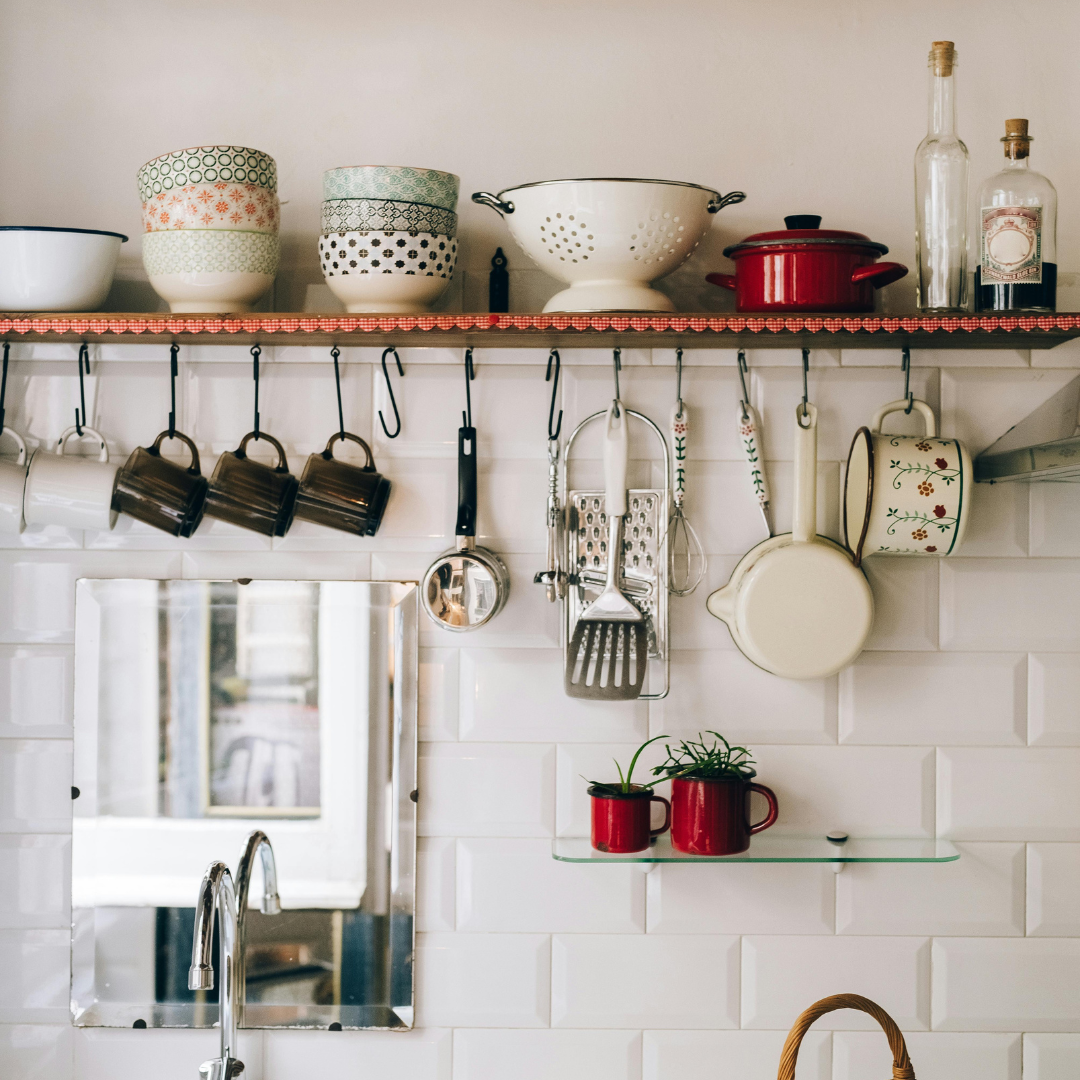
Before you touch a single drawer, walk through how your kitchen gets used across a normal week. Notice where people stand to make coffee, pack lunches, or unstack the dishwasher. Those spots are your zones. Each one needs its own home for the tools it uses.
A kitchen organisation system built on zones beats one built on categories. It puts things where your hands already go. Plates live near where you unpack the dishwasher. Lunchbox gear lives near the fridge and the bench you actually pack on. Baking trays live near the oven, not wherever there happened to be a spare shelf.
This zone-first approach also makes it obvious where the system is missing a home for something. If an item has nowhere obvious to land, that’s the gap to solve before you buy another container.
What’s Actually Slowing Your Kitchen Organisation System Down?
Watch for the moment someone stalls mid-task, hunting for a lid or the one working pair of scissors. That pause is where your system is breaking down. It’s the clearest signal for where to start.
Fix the worst offender first, not the whole kitchen at once. One working zone builds momentum. An ambitious weekend overhaul usually stalls halfway through the pantry, and leaves half the kitchen worse than before you started.
Where Should Everyday Dishes Live?
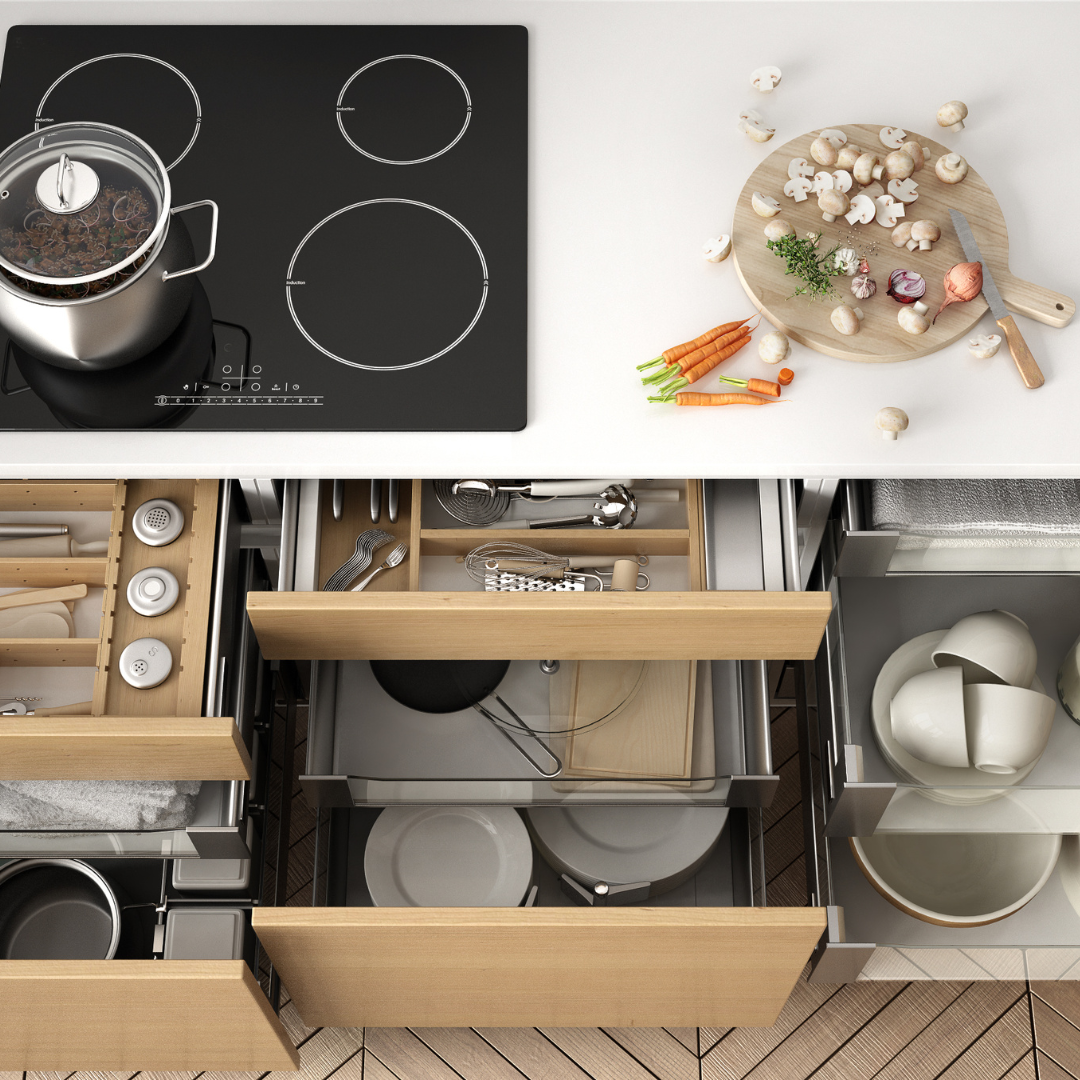
Everyday plates, bowls and cups belong at a height kids can reach on their own. That may mean moving your good dinner set higher up. A kitchen organisation system that makes kids dependent on an adult for a cup of water will not survive a busy week, however tidy it looks on day one.
Keep duplicates to what you actually use in one wash cycle. Extra mismatched mugs and takeaway containers are the fastest way for a cupboard to slide back into chaos. They crowd out the pieces your family reaches for every single day.
Build a Kitchen Organisation System That Survives the Week
Every system drifts. Papers land on the bench, containers lose their lids, and the fridge door fills with school notices. A five-minute reset each evening or each Sunday catches the drift, before it becomes a full weekend project.
Walk each zone, and put back what’s wandered. Toss anything that shouldn’t have made it into the kitchen at all. This single habit, more than any container purchase, is what makes a kitchen organisation system last past the first month.
Involve the family in the reset, even briefly. A system only one person maintains isn’t really a system. It’s one more job added to your list, and it will quietly fall apart the first week you’re too busy to do it alone.
Ready to Get Your Home Organised?
If you’d love a professional set of hands to help you declutter and organise your home, Eve and the team are here to help. We work with busy Melbourne families to create calm, functional spaces with simple systems that actually stick.