

Decision fatigue when decluttering is the real reason your Saturday sorting session grinds to a halt by early afternoon. It isn’t a lack of motivation. Your brain is running out of fuel for one more small choice. Keep, donate, toss, relocate — repeated hundreds of times in one session.
You’ve been trying. You cleared the pantry in January, tackled the wardrobe in March, and started on the playroom last month. Somewhere in every one of those sessions, the energy drained out of you before the job was done. That drain has a name. Once you can see it, you can build a system that doesn’t rely on willpower alone.
Every family we work with has felt this. It is more common than you think, and it has nothing to do with how organised you are on paper.
Quick Takeaways
- Every keep-or-toss choice draws from the same mental battery, so the more decisions you make, the faster it drains.
- Big sessions usually fail from decision volume, not tiredness: hundreds of tiny calls in a row wear you down.
- A simple three-bin system cuts the number of decisions in half, so the energy lasts to the finish.
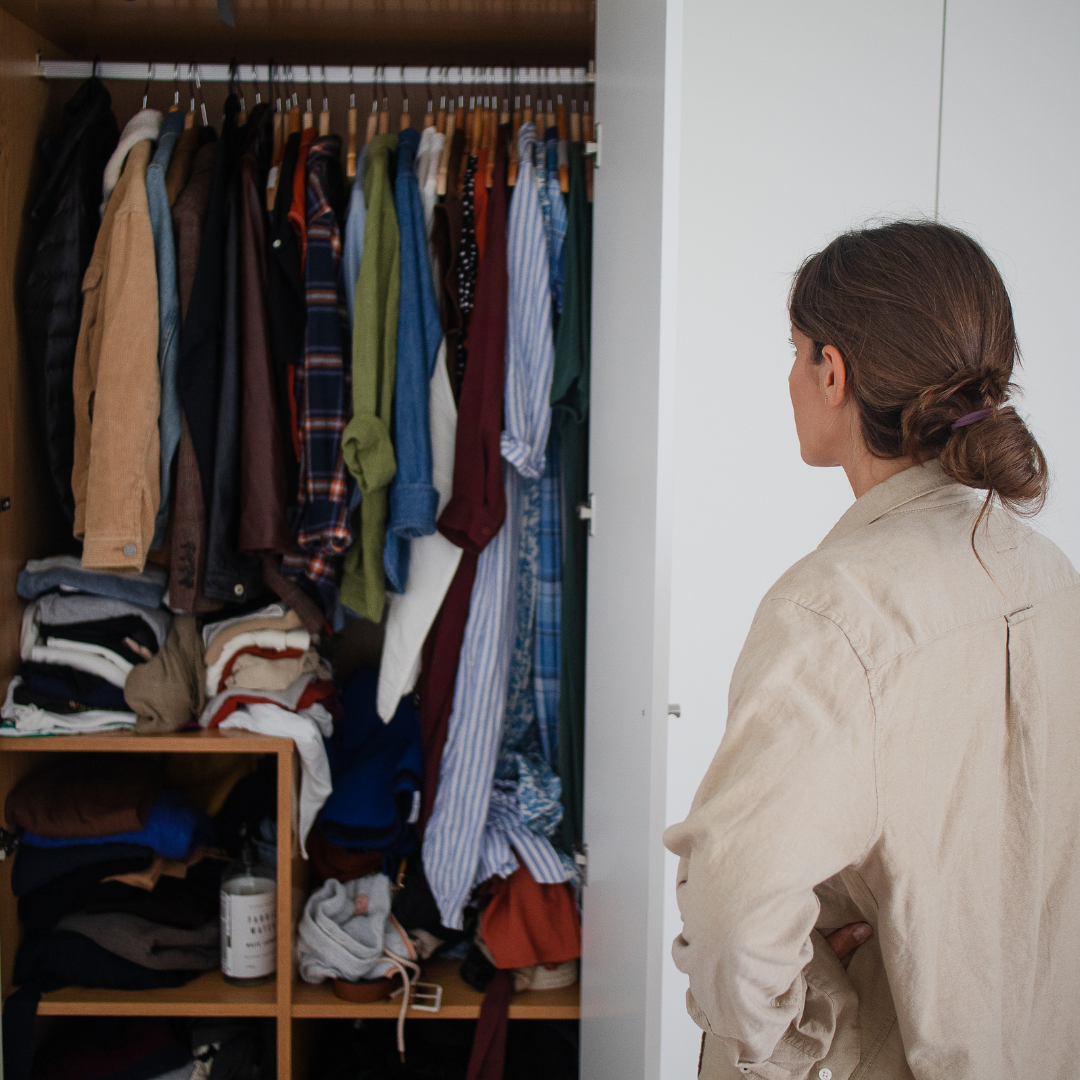
What Decision Fatigue When Decluttering Actually Feels Like
It shows up as standing in front of one drawer, holding one item, unable to decide where it goes. It shows up as a “maybe” pile that quietly grows all afternoon and never gets a second look. It shows up as snapping at your kids over something small, twenty minutes before you planned to stop anyway.
None of that means you are bad at this. It means your mental battery ran flat. Every one of those choices used the same limited resource, no matter how tiny the item was. A hair tie takes the same mental toll as a childhood toy, because your brain still has to decide, weigh, and commit.
Why Does Decision Fatigue When Decluttering Hit Some Rooms Harder?
Some rooms punish you with volume. A kitchen drawer full of loose odds and ends forces dozens of near-identical decisions. So does a folder of school paperwork, or a box of kids’ artwork. A garage or a living room holds fewer items. Each one is bigger, but you make far fewer calls overall.
That is why the craft cupboard can flatten you faster than the whole garage did last month. Volume of decisions matters more than the size of the space. Once you plan around that, you can stop blaming yourself for finding “easy-looking” rooms so hard.
The Real Cause: Too Many Micro-Decisions, Not Too Little Time
Most advice tells you to find more time or more energy. However, the real bottleneck is rarely time. It is the sheer number of small judgement calls, stacked back to back, with no recovery between them.
Each decision, however minor, draws from the same account. First you decide about the school notices, then the expired pantry jars, then your child’s old drawings, then the mismatched containers under the sink. By the tenth or twentieth call, your standards drop and your pace slows. Quitting starts to feel like relief instead of failure.

How Do You Avoid Decision Fatigue When Decluttering?
Start by cutting the number of decisions, not the number of items. Sort by category across the whole house instead of room by room. Similar choices sitting together get faster with repetition. Batching every water bottle in the house, for example, turns twelve separate decisions into one pattern.
Limit yourself to three homes for anything you touch: keep, donate, or bin. A fourth “maybe” option feels kind in the moment. However, it is exactly where decision fatigue when decluttering wins, because you never finish deciding.
Handle the easy categories first. Clear duplicates, expired items, and anything broken before you touch anything sentimental. That way, your best judgement is still available when the harder calls arrive. Finally, work earlier in the day where you can, since willpower runs down over the course of a normal day for almost everyone.
A Simple System That Removes the Decision Altogether
The most reliable fix isn’t more discipline. It is removing the decision before it happens. Give every category a permanent, obvious home. Putting something away should never be a fresh judgement call again.
A donate box that lives by the door does this job. So does a labelled bin for outgrown clothes, and a one-in-one-out rule for toys. Each one turns a decision into a habit. Once the system holds the choice for you, your family follows it too, because there is nothing left to figure out. That is one less thing on your mind, every single day, not just on the Saturday you set aside to declutter.
Ready to Get Your Home Organised?
If you’d love a professional set of hands to help you declutter and organise your home, Eve and the Ducks in a Row team are here to help. We work with busy Melbourne families to create calm, functional spaces with simple systems that actually stick.